◇
Target operating model
Target operating model design and capability strategy — the shape the organisation needs, not the org chart it inherited.
Operating Model, Process & Agile Redesign
Redesign how decisions get made, on what cadence, with what evidence — and increasingly with which non-human contributors in the loop. Target operating model, end-to-end process redesign, product and platform models, and governance that survives contact with a steering committee.
What I redesign
Target operating model design and capability strategy — the shape the organisation needs, not the org chart it inherited.
Governance, decision rights and portfolio steering that survive contact with a real steering committee.
Lean, Lean Six Sigma and value-stream mapping — the differentiator versus framework-led consultancies that redesign slides, not processes.
Product and platform operating models, and agile at scale where it genuinely applies — not everywhere by default.
Decision velocity, continuous governance, hybrid human–agent teams and outcome-based measurement.
Roles, responsibilities, matrix and community models, and cross-geography collaboration.
Assurance, recovery and remediation of underperforming programmes — regaining control when a transformation stalls.
The uncomfortable numbers
~9%
Only around 9% of organisations have reached agile or product-and-platform operating models; the majority still run industrial-age structures.
Several ×
Organisations that redesign workflows end-to-end capture several times the AI value of those running isolated pilots.
The pattern
The 2026 failure pattern: keeping the existing foundation and assuming it covers the new layer.
Déjà vu
Performing change instead of changing, buying tools before finding problems, celebrating pilots that can't scale, measuring adoption while outcomes stay flat.
Why me for this
I ran the agile transformations that failed this way — which is why I recognise the pattern in AI programmes.
Very few advisors can say it. I lived the previous cycle: the change programmes that performed change instead of changing. That scar tissue is the most useful thing I bring to an AI-era operating-model redesign.
Proof of process depth
People-centred operating model
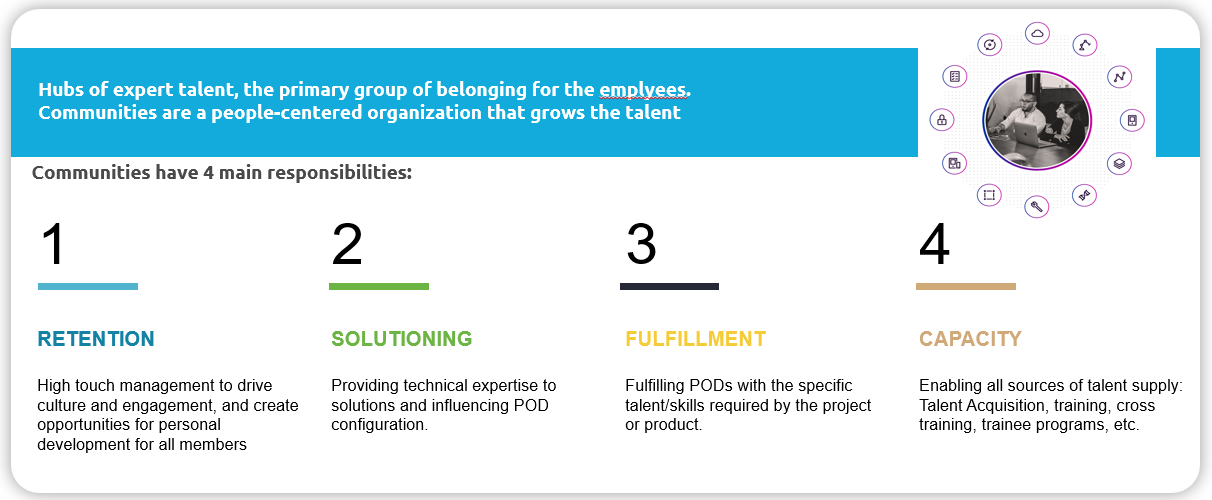
Use communities to connect retention, solutioning, fulfilment and capacity within the transformed organisation — so the operating model is something people run, not a diagram they ignore.
Operating-model redesign, in sequence
Facts, constraints and maturity.
Future capabilities and design.
End-to-end value streams, not slides.
Decision rights and cadence that hold.
Roles, communities and measurement.
Governance in the room
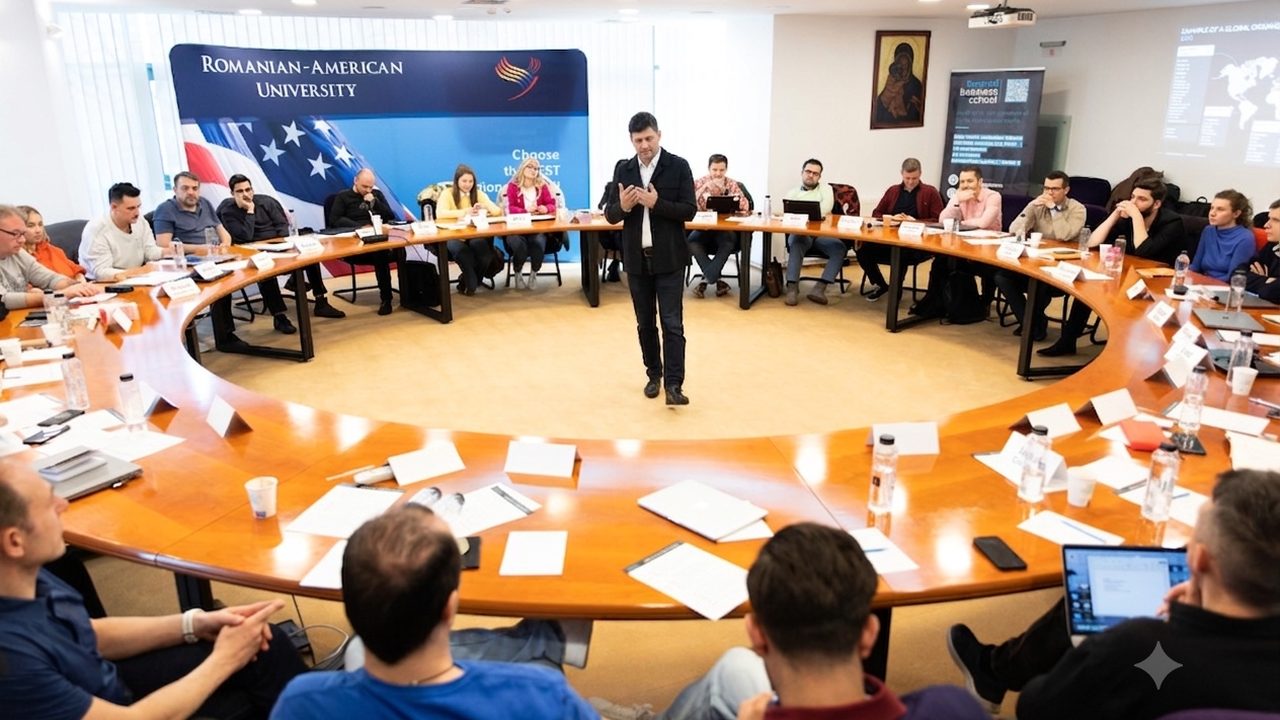
Every stage gate plays out as a real conversation with sponsors, delivery leads and business owners — which is why governance design gets as much attention as the target model itself.
An asset of the operating model
You cannot redesign how decisions get made without deciding who — and where — makes them. So every operating-model engagement carries a sourcing-mix option: onshore, nearshore, offshore or rightshore, and whether a capability is vendor-led or owned. It is not a separate project bolted on afterwards; it is a lever inside the target model.
See the sourcing capability ↓Sourcing, RightShoring & GCC
Location strategy, sourcing mix and capability-centre design for organisations moving from vendor-led outsourcing toward owned or hybrid capability. Greenfield setup, brownfield assessment, transition and ramp-up — across Europe, North Africa, the Middle East, India and the United States.
Sourcing strategy and sourcing-mix design across onshore, nearshore, offshore and rightshore.
Where to place which capability — and the trade-offs that decision carries for talent, cost and control.
Global capability centre design, including build–operate–transfer (BOT) structures that de-risk the move to owned.
Greenfield shared-service and delivery-centre creation; brownfield assessment and scale-up or scale-down.
Vendor panel, multi-sourcing governance and ESN / supplier management.
Pricing model design and outcome-based contracting that aligns incentives with results.
Transition, knowledge transfer, ramp-up, stabilisation and reversibility.
Hiring protocols, local partner networks and university ecosystems that feed the centre.
Delivery-centre maturity
Evolve the delivery model without disrupting operations. Each stage increases industrialisation, cross-functional capability, service ownership and commitment to measurable outcomes — the path from staffed capacity to a centre you own.
Secure critical knowledge, service continuity and individual expertise.
Consolidate capabilities into governed, scalable teams.
Industrialise delivery across domains, entities and geographies.
Operate end-to-end services with clear accountability and outcome-based commitments.
Track record
An anonymised, representative engagement: assessed an existing nearshore setup, reset the rightshore strategy and prepared the organisation for expansion — the difference between a capability on a slide and one that runs.
Europe
Shared-service-centre creation: entity structure, local legal and administrative constraints, and university partnerships that feed the talent pipeline.
India
Sourcing strategy, pricing and hiring protocol with Risic India — the groundwork for a scalable offshore presence.
Reset
Brownfield assessment of an existing nearshore setup, a reset rightshore strategy, and a readiness plan for expansion.
Next step
Define the target, redesign the processes end-to-end and build governance that survives the steering committee.