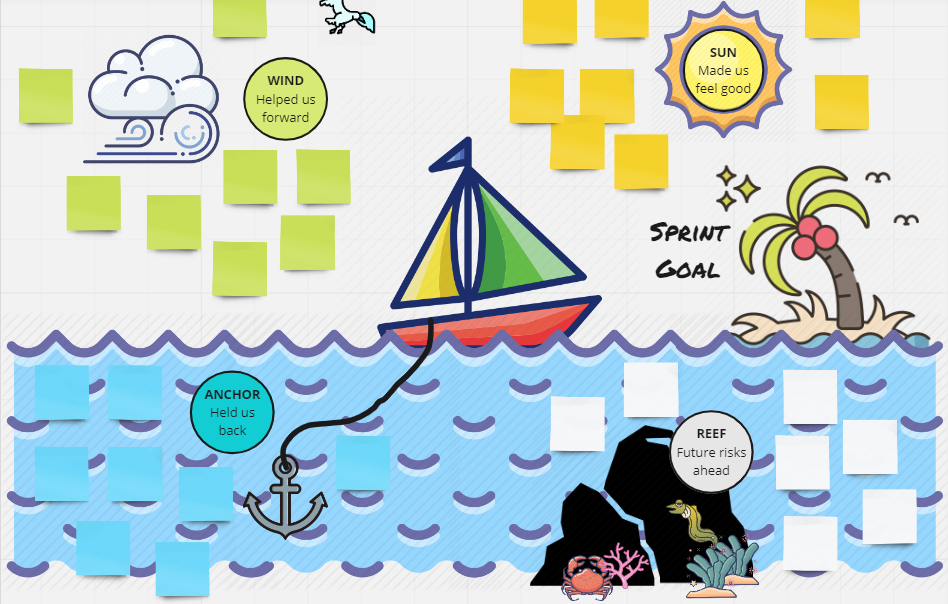
I've run this exercise with teams from Bucharest to Casablanca to Lille, and it still surprises me how fast a shared metaphor gets a group past defensiveness. The Sailboat Retrospective is a visual facilitation format for helping a team examine a completed sprint without reducing the conversation to a list of successes and failures. The metaphor creates a shared language: a destination, forces that move the team forward, constraints that hold it back and risks that may lie ahead.
A retrospective creates value only when insight becomes an owned, observable improvement in the next sprint — everything before that is just a nice conversation.
Reading the metaphor
The sun can also be used to recognise positive contributions and moments that strengthened the team. This matters because a retrospective should reinforce effective behaviours as well as identify improvement opportunities.
A disciplined facilitation sequence
- Set the context. Restate the sprint goal and explain each element of the metaphor.
- Reflect individually. Let participants capture observations before the group conversation begins.
- Share and clarify. Present observations without immediately debating solutions.
- Cluster themes. Group related points to reveal systemic patterns rather than isolated symptoms.
- Prioritise. Select the issues or strengths that deserve attention in the next sprint.
- Commit to action. Define a limited number of actions with an owner and a visible success condition.
What makes the exercise useful
The format gives remote and co-located participants the same visual reference. It can lower the barrier to discussing difficult topics because the team talks about the forces acting on the boat rather than attributing blame to individuals — which matters more than most facilitation guides admit, because a team that's busy assigning blame has stopped listening to each other.
Leadership watchpoints
Do not overload the board with actions — I've made that mistake myself, more than once, walking out with nine commitments and watching the team quietly deliver none of them. Protect psychological safety, distinguish facts from interpretations and revisit previous commitments before opening a new retrospective. The objective is continuous improvement, not retrospective theatre.

Alin Popovici
Executive advisor, transformation and delivery leader — and a guest lecturer on complex-programme leadership for the Executive MBA at Bucharest Business School (ASE Bucharest, in partnership with CNAM Paris).